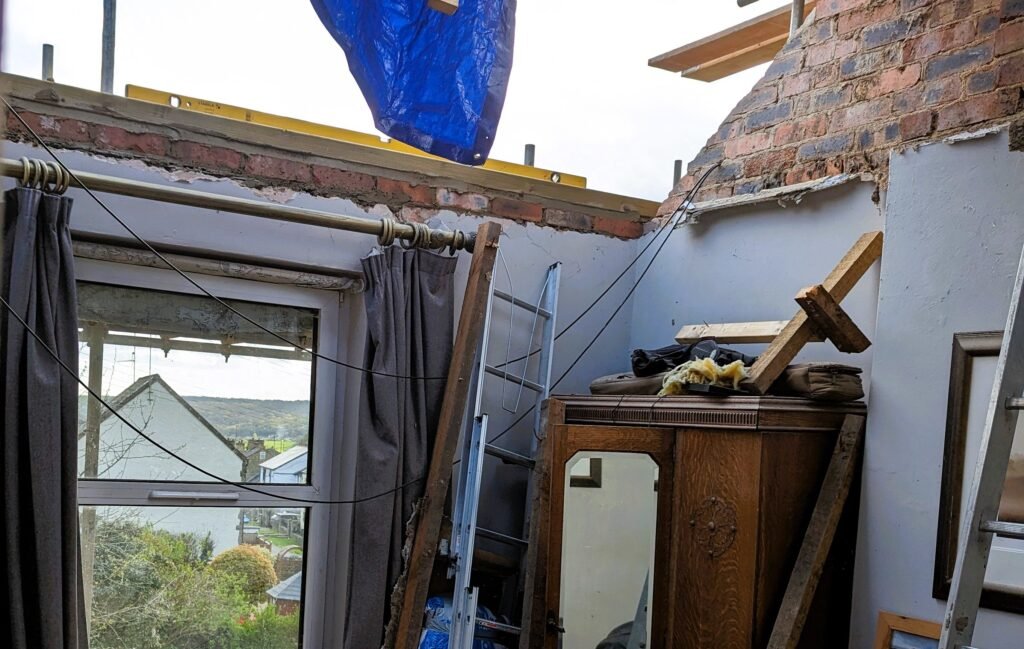
3 Years, No Heat: An ECO4 Nightmare
Is this Institutional Corruption? Incompetence? Or the Inevitable Outcome of a Profit-First System?
Done with the wet and the cold this Winter? Well, imagine having no heating for 3 entire years, after a Retrofit scheme designed to reduce bills destroys your home and heating system. You have been suffering with debilitating chronic insomnia. Burnt out. No money to fix it. Regulators have been aware for 18 months. But nobody acts. Nobody cares.
This article provides policymakers with an insight into real-world regulator performance, what happens when retrofit goes wrong, and how a customer-first approach is the secret to sustainable outcomes and economics.
Welcome to my real-life Retrofit nightmare.
This January, the Public Accounts Committee revealed the dire state of ECO4 consumer protection: structurally designed to insulate regulators first, homes second.
The Public Accounts Committee Chair states ECO4 represents:
“the most catastrophic fiasco that I have seen on this Committee”
Public Accounts Committee Report into ECO4: Jan 2026
PAC report headlines are synonymous with my own real-life experience
- TrustMark (the sole government-appointed quality assurance body for Retrofit) did not notify DESNZ about high levels of faulty installations until October 2024 – more than 2 years after ECO4 started.
- Nearly a year after the problem emerged (September 2025), only ~3,000 defective homes had been found and fixed out of 30,000 identified. However, this figure was to January 2025 only – there have been more since. My forecast at www.nature-society.org is c.65–70,000 homes over the 4-year term, including high-risk measures such as heat pumps, which were not included in the 30,000 headline (seemingly avoiding scrutiny).
- The most basic fraud measures were only introduced 3.5 years into a 4-year scheme.
- The quality assurance system has materially worsened consumer experience in practice: “too layered, fragmented and complicated” with an absence of accountability. Regulators continue to focus on their own roles instead of whether the system was actually protecting consumers.
- Fewer consumer protections than when buying a fridge-freezer, for a Retrofit grant worth c.£50,000 capable of destroying entire homes. The system was “almost bound to fail”.
Despite this, claims of “systemic failure” by an outgoing Minister were softened to “systemic failings”, blaming a select number of 39 suspended installers. In reality, the problems ran far deeper and a ‘clean sheet’ approach is required to system design.
The PAC’s own wording: A clear and catastrophic failure
How has Parliament Responded? (in their own words)
Parliamentary and senior officials have made clear commitments:
“No household should be asked to pay any money to put things right.”
Minister for Energy Consumers
“remediation of the previous works should happen whatever… we are determined to clean it up.”
Secretary of State – Ed Miliband
However, little has happened in practice.
So, here’s the question: If the Department for Energy Security and Net Zero holds a position of “no household pays” and “we’ll clean it up”, why am I still without heat after three years?
Thankfully, one solitary good thing has come from this ordeal.
I am proud to be part of a group of c.400 incredible people affected by this crisis, many already in challenging situations. Many report poorly designed and mis-sold heat pumps that have led bills to rise unsustainably, in some cases to 3x pre-ECO4 costs.
I’m not anti-heat pump – the opposite.
But, for the technology to work effectively in low-income households, commissioning should follow a chain of people > problem > proposition > people, with profit as a byproduct. Place profit first (as ECO4 incentivises), and mid-term failure is all but guaranteed. Place the customer first, and sustainable profits will follow.
As a former marketer, I can say with some authority that ‘profit first, people second’ cuts to the heart of a failed business model and is an invitation for further failure if not addressed at the most fundamental level of values, ethos, and insight.
A DESNZ report (Boiler Upgrade Scheme Evaluation: 2025 Interim Report, published 21 January 2026) claims “A third of property owners (32%)” accessing heat pumps under the Boiler Upgrade Scheme (BUS) said they had experienced an issue with their low-carbon heating (LCH) system that needed addressing since installation. BUS is believed to have significantly higher levels of quality standards than ECO4, which targets low-income households, many with health issues and disabilities.
Despite this, there has been no review of ECO4 heat pump outcomes. And little to no support for those who have faced difficulties.
So: who advocates for the household when things go wrong and the situation is as serious as having no heat for weeks, months, or years?
Let’s take a look at TrustMark, MCS, and Ofgem — three key players in the ECO4 consumer protection system – plus Scottish Power, the obligated supplier funding my own ECO4 grant (more to follow in Part 2).
For context, the installer in question rose from £25m revenue to £81m revenue between 2023 and 2024, with a gross margin of 51% and a reported EBITDA of 43% (£35m).
@TrustMark
Role The only Government-endorsed quality scheme for Retrofit and Ofgem’s ECO delivery partner, overseeing retrofit quality assurance to PAS standards in ECO4. Their operating framework states “TrustMark exists to enhance consumer protection”.
What happened / did not happen TrustMark is presented as the government-endorsed “quality assurance” backbone of retrofit; however, in my experience, functions more like a liability firewall.
- Funded by lodgement/industry fees, it sits at the centre of a system now publicly associated with a 98% EWI major-defect rate
- Complaints have remained unresolved for 18+ months while heating remains absent, without advocacy, or interim measures
- Phone calls, emails, and valid questions are ignored, including explicit requests for crisis talks where people have been left without functional heating over winter
- A TrustMark-instructed ‘independent survey’, carried out by an ex-employee (albeit a lovely one), took 2 hrs in attendance and 5 months to report (still unfinalised). Its findings are of clear installer negligence, which TrustMark appears to treat as liability, rather than enforcing standards. Meanwhile, I have been made to endure a 3rd avoidable winter without heat
- Installs are treated as “complete/successful” while the lived outcome is dire
- TrustMark has repeatedly avoided / delayed decisive rejection of measures that are badly installed, misrepresented, and mis-specified. In turn, this has resulted in 3 years of no heat being reported as bill savings to the British public. I am gravely concerned as to the potential scale of failure being reported as successful ‘Annual Bill Savings’
- Process comes before people and appears to be used as a smokescreen
- Transparency is absent – I believe purposeful action is being taken to avoid scrutiny – a culture of cover-ups and inconvenient truths appears to exist – which feels like gaslighting, rather than support in practice
- TrustMark have previously stated “we have no duty of care to consumers” and, for me, this says it all. TrustMark have acted as a Trade Association, prioritising growth and quantity, over quality, in conflict with its own MLA, Operating Framework, and Code of Conduct
TrustMark exists in close proximity to installers, who have high influence, but is distanced from consumers, who have low influence. They attend events where installers claim to be “saving lives”, sponsored by companies earning tens of millions of bill payer monies, without meaningful scrutiny. The feedback loop is closed.
In a survey of 45 people who consider themselves victims of ECO4, none felt TrustMark has a legitimate place as the UK’s sole government-appointed quality assurance body for Retrofit.

@MCS (Microgeneration Certification Scheme)
Role MCS is the UK quality mark for small-scale renewables (including heat pumps and solar), with roles in standards and consumer protection, and a complaints/escalation framework that also covers certification bodies. They have recently been awarded a monopoly, despite having no experience of consumer advocacy or dispute resolution and a poor track record in upholding standards and ensuring consumer protection.
MCS are funded by the industry and hold warranty liabilities, posing a direct conflict of interest with consumers.
What happened / did not happen Deflection is routinely dressed as neutrality.
- On being told there was no heat / non-commissioning, polite requests for a technical conversation were refused. Even the simplest of requests – for a phone call – were declined – and instead offered to the installer.
- Instead, MCS contacted the installer and treated that as sufficient engagement, with no technical review or investigation
- Requests for site visits were rejected
- Installer representations were accepted without meaningful independent scrutiny
- Clear breaches of MIS3002 / MIS3005 were reframed as “a dispute” despite technical facts being available for inspection
- The need to replace a roof structure after solar panels were installed onto a defective structure with no appropriate surveying, was ignored
- Once it is labelled “a dispute”, enforcement evaporates
- Requests for escalation are ignored, with no independent scrutiny or oversight
- When treated as a whistleblowing submission, that too is ignored
MCS is funded by installer payments. Standards enforcement is not just avoided, but absent at the point it matters most.
@Scottish Power (obligated party / funder)
Role Scottish Power is one of 9 obligated energy suppliers in ECO4 delivery (DESNZ > Ofgem > Energy Supplier > Grant Administrator > Installer)
What happened / did not happen I contacted Scottish Power around 1 October 2025, it having taken over 2 years to discover the name of the obligated supplier. They were made fully aware I had no functional heating since March 2023 and was entering a third winter without heat.
Their practical position has been: “TrustMark is responsible for ALL technical oversight”. A position the legislation (ECO Order 2022) does not appear to allow them to adopt – a plain denial of clear legislated accountability.
- Scottish Power states that if TrustMark rejects measures, funds can be recovered – but only to their own advantage
- That they are unwilling to intervene, as they are wholly reliant on TrustMark to assure quality and oversight – including for heat pumps and alleged fraud; for which TrustMark claims no accountability
- For two years, the installer maintained it was effectively impossible to identify the funder – it later became apparent that a letter had been addressed to myself and shown to Scottish Power to fulfil a contractual obligation, though was never sent. The installer repeated denied that they knew the name of the funder, long after the letter was dated. The failure to disclose appears to have been a deliberate concealment. The installer was also found by the ICO to be in breach of GDPR.
- When I provided detailed allegations of fraud/misrepresentation risk to Scottish Power, they did not even provide basic acknowledgement via email, despite those allegations being verifiable with a site visit and tape measure (together with photos and documents to hand).
- Scottish Power represented documentation as complete / nothing to see while refusing requests for deeper audit review (including a ‘C3’ home inspection)
- At best, Scottish Power have ignored their duties under the ECO Order 2022 and allowed a customer to whom they are likely to owe a duty of care, to suffer a 3rd winter without heat unnecessarily.
It is clear that consumer protection is absent. Instead, this is further evidence of institutional gaslighting, where the potential liabilities for fraud and systemic abuse are £tens of millions, at the expense of low income families, many of whom are already struggling.
@Ofgem
Role Ofgem administers ECO4 on behalf of DESNZ, including supplier obligations, notifications, auditing, counter-fraud activity, and reporting on scheme progress.
What happened / did not happen In practice: Ofgem deflects to TrustMark, with no visible urgency proportionate to harm, and no meaningful route to justice for households in crisis. TrustMark then denies accountability and fails to meaningfully respond, even where their own survey has confirmed the facts. Furthermore, Ofgem’s ‘whistleblowing hotline’ refuses to handle matters relating to ECO4 fraud. Their fraud desk claims no systemic accountability and works on a reactive-only basis. Calls to escalate to the Serious Fraud Office go unheard. The PAC reports the high liklihood of signficant undetected fraud, and Ofgem claims no remit for a more thorough audit of EPC lodgements, relative to claimed (self-regulated) RdSAP submissions, which have been subject to little or no scrutiny. In practice, this has allowed less scrupulous installers to mark their own homework and game the system. Meanwhile, Ofgem have been firmly asleep at the wheel.
Where competence is absent, containment becomes the strategy.
So: Is this Institutional Corruption? Incompetence? The Inevitable Outcome of a Profit-First System? Or all three?
And what should the emergency protocol be when a household is left without heat after retrofit works?
I’d love your thoughts in the comments below.
Part 2 will look at accrediting bodies, including NICEIC, HIES, and ECMK, together with a take on best practice vs. ECO4 realities.